
Higher Education

Judgment, Learning, and Responsible AI in a Time of Institutional Disruption
Higher education is operating at an inflection point.
Institutions are being asked to justify the value of academic programs at the same time that the nature of work, professional identity, and skill relevance are increasingly uncertain. Students and families question return on investment. Faculty are navigating shifting expectations around teaching, research, service, and technology. Leaders are making consequential decisions about curriculum, assessment, and artificial intelligence without clear visibility into what future roles will require.
In this environment, the central challenge is not prediction. It is judgment.
I draw on long-standing experience inside academic institutions to examine how learning science, leadership science, systems thinking, and ethical judgment shape decision-making, performance, and professional formation under sustained pressure.
Academic institutions must prepare students for roles that do not yet have stable titles, pathways, or competencies, while preserving rigor, integrity, and public trust. That tension reshapes how people teach, learn, decide, and lead, influencing faculty identity, student motivation, assessment design, governance, and the use of emerging technologies such as artificial intelligence.

The NeuroLUCID™ Architecture in Academic Systems
Every service I offer draws from three intelligences that shape how people think, decide, and perform under pressure.
Together, these intelligences explain why capable faculty, students, and leaders struggle in high-stakes academic environments and how institutions can design conditions where sound judgment becomes the default rather than the exception.
Inner Intelligence
The internal systems that shape how individuals respond under pressure.
Inner Intelligence focuses on emotional regulation, stress patterns, energy management, and conditioned responses that influence attention, motivation, and decision-making.
In academic settings, this appears in how faculty teach under evaluation pressure, how students perform under grading and professional stakes, and how leaders respond when institutional scrutiny intensifies.
Inner Intelligence asks:
Why do capable people lose focus, overreact, or disengage under academic pressure, and what supports steadier performance?


Leadership Intelligence
The behaviors others experience in classrooms, committees, and leadership roles.
Leadership Intelligence examines communication, presence, judgment, collaboration, conflict navigation, and influence across academic roles.
This intelligence applies to deans, faculty, administrators, and student leaders who shape learning environments, guide decision-making, manage expectations, and influence culture through everyday interactions.
Leadership Intelligence asks:
How do teaching behaviors, feedback styles, and leadership choices strengthen learning and trust, or create friction and misalignment?
System Intelligence
The conditions that make good decisions easier or harder.
System Intelligence focuses on the structures that shape behavior at scale, including workflows, norms, incentives, governance, accountability, culture, and technology.
In academic contexts, this includes how policies, assessment design, faculty guidance, and institutional expectations interact with human cognition under pressure.
System Intelligence also encompasses decisions around artificial intelligence, including oversight, decision rights, academic integrity, and the limits of delegation when human judgment and accountability remain essential.
System Intelligence asks:
Does the academic environment support sound judgment, learning transfer, and ethical behavior, or does it unintentionally undermine them?

Together, Inner, Leadership, and System Intelligence form the architecture of NeuroLUCID™ and provide a coherent framework for understanding performance, judgment, and decision-making across academic institutions.
Academic Leadership, Teaching, and Learning Science Experience
My work is informed by direct experience inside academic institutions.
I have served as a full-time law professor teaching both doctrinal and experiential courses, integrating applied neuroscience, adult learning theory, and experiential education to support durable learning, ethical judgment, and professional formation.
My teaching has been recognized through teaching awards, reflecting sustained excellence in classroom engagement, applied skill development, and student learning outcomes.
Beyond the classroom, I have served on faculty committees and participated in shared governance, curriculum development, and program oversight. This work required navigating faculty culture, institutional standards, and student wellbeing within real academic constraints.
I built and managed an academic program designed to bridge the gap between classroom instruction and professional practice. That role involved curriculum design, faculty collaboration, assessment strategy, student performance outcomes, and operational leadership.
I also served as a Provost Academic Fellow, contributing to institution-level conversations on academic strategy, innovation, and cross-unit collaboration.
Artificial Intelligence and Academic Decision-Making
Academic leaders are under increasing pressure to decide how artificial intelligence should be used in teaching, assessment, research, and administration.
My work in this area focuses on decision quality and governance rather than tools or vendors.
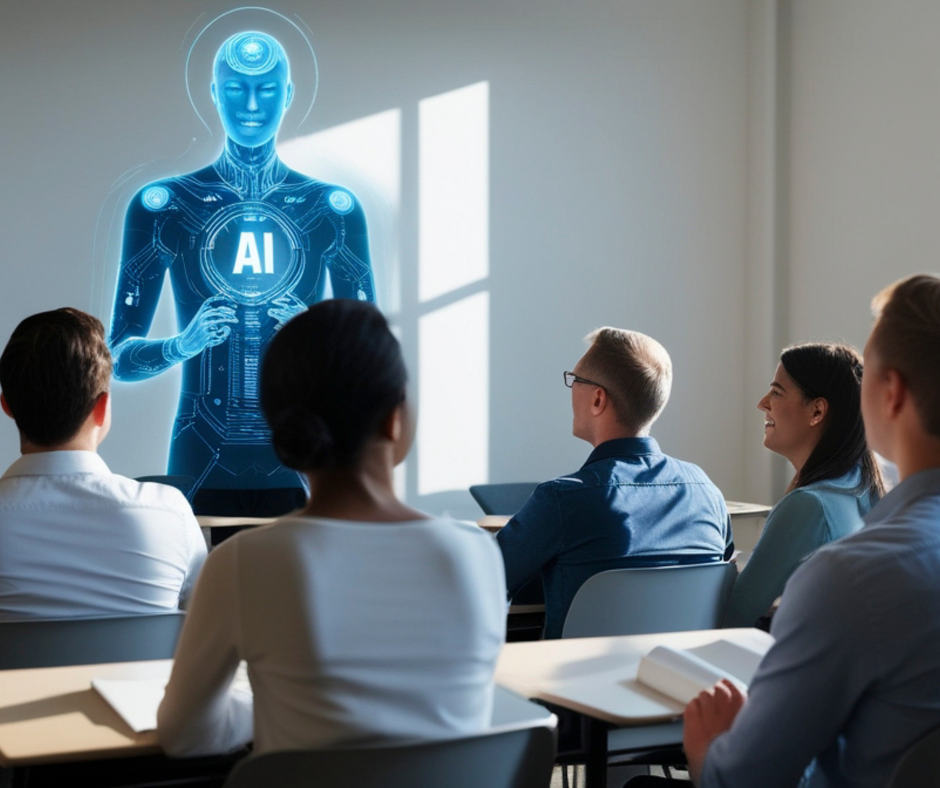
Academic leaders are confronting questions such as:
-
Where AI use supports learning versus undermines skill development
-
How to guide faculty without imposing rigid or unworkable rules
-
How to design assessments that preserve reasoning and professional judgment
-
How to prepare students for professions shaped by AI
-
How to define decision rights, oversight, and accountability
AI decisions in academic environments are system decisions. They shape behavior long after policies are written.
In periods of uncertainty, institutions that invest in judgment, learning transfer, and ethical decision-making preserve value even when specific outcomes remain unclear.
Faculty and Staff Coaching in Academic Settings
I offer coaching for faculty and academic staff navigating sustained pressure and expanded academic roles.
This work is designed for professors, administrators, and professional staff who carry responsibility for teaching, research, service, leadership, and institutional change.
Faculty and staff coaching focuses on:
-
Decision-making and judgment under workload and role strain
-
Communication and influence within shared governance environments
-
Managing competing demands across teaching, scholarship, service, and leadership
-
Navigating role transitions such as promotion, tenure, or leadership appointments
-
Sustaining performance and engagement without burnout
This coaching is developmental, confidential, and distinct from evaluation or performance management. It draws on applied neuroscience, evidence-based practices, and lived familiarity with academic culture, incentives, and constraints.
Formats may include individual coaching or small-group cohorts for faculty or staff, aligned with institutional norms and context.
Future-Facing Work in Legal Education
In parallel with my academic leadership experience, I am working with the TEDLaw program, an initiative connected to the founders of the TED Conferences, focused on reimagining legal education and professional formation.
Legal Education, Evolved — Law Insider by SimpleDocs, Episode 8, 2025. Featured guest on how legal education must evolve to prepare lawyers for an AI-accelerated profession. Link: Legal Education, Evolved — Law Insider by SimpleDocs, Episode 8, 2025.
This work explores how learning science, ethics, leadership development, and emerging technology intersect in preparing future legal professionals.
It informs how I think about judgment, systems design, and responsible innovation in academic settings.
Areas of Ongoing Focus
-
Learning design grounded in applied neuroscience and adult learning theory
-
Professional formation and ethical reasoning
-
Faculty leadership and decision-making under pressure
-
Student performance, wellbeing, and sustainable engagement
-
Institutional systems that support sound judgment
-
Responsible integration of artificial intelligence in education
Where This Thinking Shows Up in Academic Practice
In academic settings, this work often shows up in practical ways, including:
-
Learning designs that emphasize micro-skills, deliberate practice, and feedback that transfers beyond the classroom
-
Faculty-facing tools that support engagement, assessment quality, and instructional judgment under pressure
-
Approaches to cognitive resilience that support steady performance during evaluation, grading, and institutional scrutiny
-
Ethical reasoning and leadership habits for environments shaped by emerging technology and AI
-
Program and curriculum structures that align clinics, labs, and cohorts with real-world professional demands
